

Cron Inspector
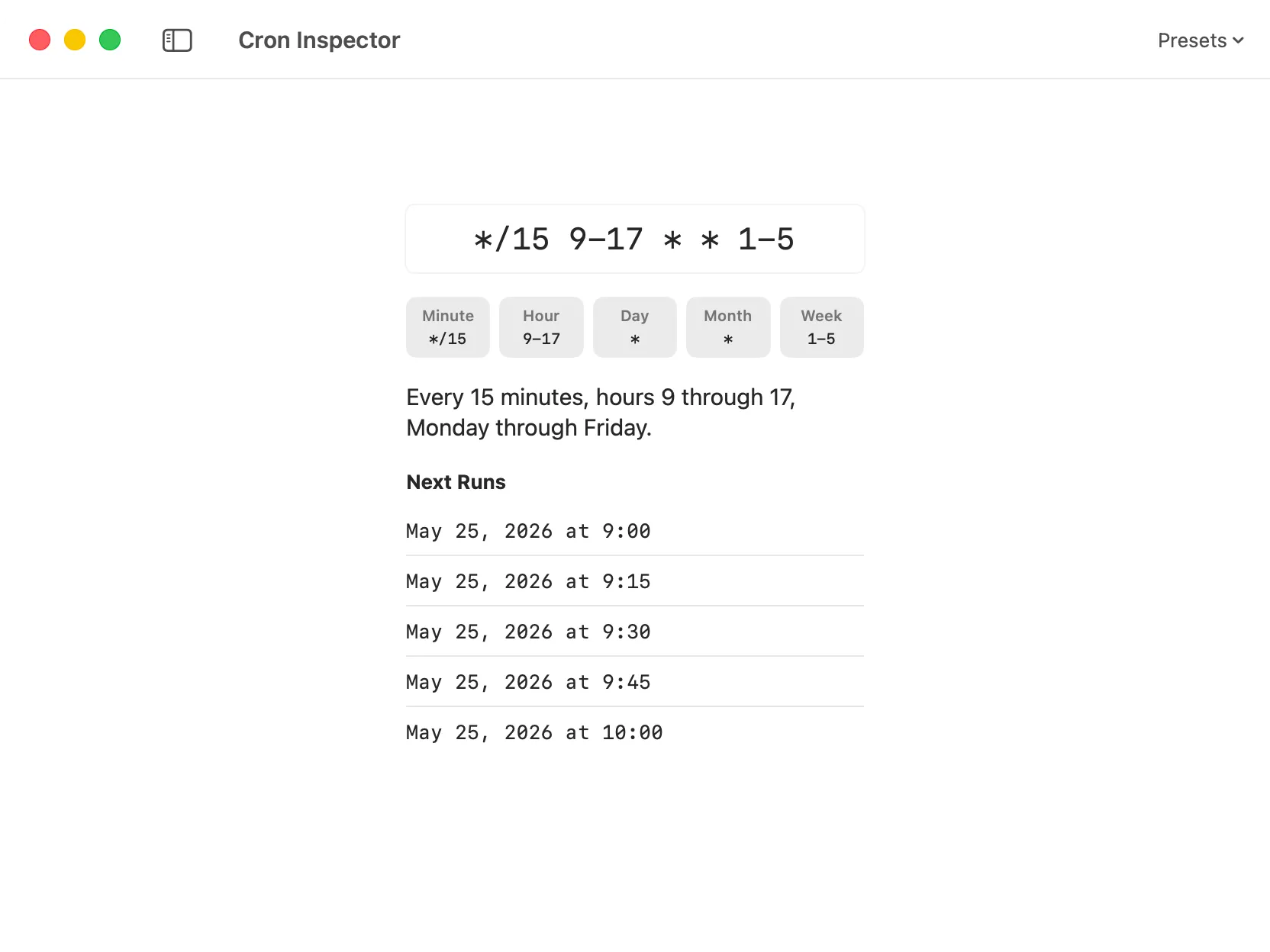
The Cron Inspector tool in DevKnife helps you understand standard five-field cron expressions without leaving your Mac. Enter a schedule, see it translated into plain language, inspect each cron field, and preview the next matching run dates before using the expression in a script, server, CI job, or automation workflow.
Key Features
Section titled “Key Features”- Plain-language summary – quickly understand what a cron expression means without manually decoding each field.
- Field breakdown – inspect the minute, hour, day-of-month, month, and day-of-week fields separately.
- Next run preview – see upcoming run dates so you can verify that the schedule behaves as expected.
- Preset schedules – start from common schedules such as every minute, hourly, daily, weekdays, weekly, and monthly.
- Validation feedback – invalid cron expressions are highlighted with a clear error message.
- Per-window persistence – DevKnife remembers the expression you were working with in each window.
Using The Tool
Section titled “Using The Tool”Enter or paste a five-field cron expression into the input field. DevKnife parses the expression immediately and shows a readable summary below the field indicator.
The five supported fields are:
minute hour day-of-month month day-of-weekFor example:
*/15 9-17 * * 1-5This runs every 15 minutes during working hours, Monday through Friday.
Presets
Section titled “Presets”Use the Presets menu in the toolbar to quickly insert common schedules. Presets are useful when you want a known starting point and then need to make a small adjustment.
Available presets include:
- Every Minute
- Hourly
- Daily
- Weekdays
- Weekly
- Monthly
Previewing Run Dates
Section titled “Previewing Run Dates”After DevKnife parses a valid expression, the Next Runs list shows upcoming matching dates. This helps catch common scheduling mistakes, such as using the wrong weekday, hour range, or step value.
Privacy
Section titled “Privacy”Cron Inspector works entirely offline on your Mac. Cron expressions are parsed locally and are never uploaded to external services.